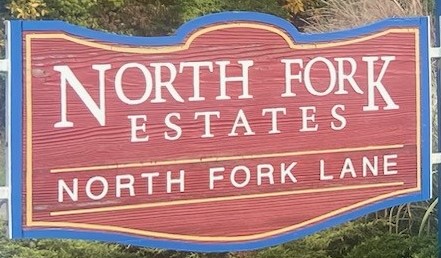
Northfork Needs a Board: What Happens Next
Doing nothing is also a decision.
Our board members have completed their terms, and no one has volunteered to take their place. Northfork is required to have an association, and an association needs a board. Without one, no one can pay the bills, fix the road, or answer a lawsuit. Every one of those problems lands on your property, your wallet, and your ability to sell your home.
No one is volunteering, and it is easy to see why
Three unpaid neighbors currently schedule and pay every vendor, collect dues, keep the books, organize meetings, work toward agreement on repaving the road, and answer a steady stream of calls, emails, and knocks on the door.
That is a second job. Saying no to a second job is reasonable. Asking harder for volunteers will not change the answer. Changing the job will.
We still need a board
As a planned community, Northfork is required under Ohio law to have an association. You might assume that if no one runs, the association simply fades away. It does not. Here is how it actually unfolds.
-
The first bill goes unpaid.
Trash collection, snow removal, and common area upkeep are vendor contracts. Our bylaws make the Treasurer responsible for paying them. No Treasurer, no payments. Picture the first heavy snow after the plow company stops coming.
Bylaws, Section 7G
-
Our insurance gets canceled.
The association carries an insurance policy that protects all of us. Without a board, no one can pay the premium, and the policy lapses.
-
No one can fix it from the inside.
Our bylaws only let remaining board members fill an empty seat, and they give the job of calling meetings and elections to the President. When the last board member leaves, there is no one left with the authority to do either.
Bylaws, Sections 6 and 7G
-
The road keeps wearing out.
The 1988 covenants run with the land. Every owner along the road is still required to pay a share of repairs. Without anyone to organize the work, repairs get deferred, damage spreads, and the eventual bill gets larger.
Covenants, Sections 11 and 13
-
Disputes go straight to court.
The covenants let any lot owner sue to enforce them. Today, disagreements go to the board first. Without a board, a lawsuit is the only tool left, and there is no one to answer one on the association's behalf.
Covenants, Section 16
It only takes one
When an association has no functioning board, a court can appoint a receiver: an outside professional who takes over everything the board used to do. This does not require a vote of the neighborhood. A single owner, or a single unpaid vendor, can ask the court on their own.
A lawsuit against an association with no board is worse still. No one has the authority to hire an attorney or respond. A case that goes unanswered can be decided against the association by default, and the association's bills are paid by its members.
You lose your say.
The receiver decides on dues, vendors, the road, and enforcement. They answer to the judge, not to the lane.
You pay for it.
Receivers and attorneys bill by the hour at professional rates. Those costs come back to owners through higher dues and special assessments.
Small communities feel it more.
Every legal bill is split across just 26 lots. For example, a $30,000 legal dispute works out to:
About $1,150 per lotIllustrative figure. Actual costs depend on the case.
Selling gets harder.
Buyers, lenders, and title companies ask about the association's status. "In receivership" or "in litigation" is not an answer any seller wants to give.
It does not end quickly.
Receivership lasts until a working board is in place. That is the same problem we have today, only now with a judge and an hourly bill attached.
A management company shrinks the job
Our bylaws already allow the board to hire a managing agent. A professional management company takes over the day-to-day work so board members can focus on the decisions that actually need neighbors.
Bylaws, Section 7F
| Task | Today | With a management company |
|---|---|---|
| Scheduling and paying vendors | Board members | Management company |
| Paying the insurance premium | Treasurer | Management company |
| Collecting dues and tracking late payments | Treasurer | Management company |
| Routine questions and complaints | Board members' phones and doorsteps | Management company, which brings what needs a decision to the board |
| Notices, records, and meeting logistics | Secretary | Management company |
| Financial reports | Treasurer | Management company prepares, board reviews |
What stays with the board: approving the budget, making major decisions like repaving, and overseeing the management company. A board seat becomes a handful of decisions a year, not a second job. That is a job three neighbors can say yes to.
What a management company does not change
Our covenants and bylaws.
Hiring a manager adds no new rules. Changing our documents still requires a vote of the owners.
Owners set the dues.
Annual dues are still decided by a majority vote of all members at the annual meeting.
Bylaws, Section 8D
Big spending still needs a vote.
Special assessments, including road repair, still require a majority vote of the members.
Bylaws, Sections 7E and 8C
The board makes the decisions.
The management company carries out what the board decides. It does not set policy, and it answers to the board we elect.
Yes, this adds cost. So does every alternative. The difference is that a management company works for a board we elect. A receiver works for a judge.
Cedar is our most realistic option right now
The board reached out to several management firms. Cedar Management Group was the most responsive and the most helpful. When time is short, how quickly and clearly a company responds before it is hired is a good preview of how it will respond after.
Why not a longer search?
A thorough search takes months of comparing proposals, checking references, and negotiating terms. That work requires the volunteers we do not have. Waiting for the perfect choice means going without any board at all, which is the outcome we most need to avoid. A one-year term gets the essentials covered now and gives a new board a full year to evaluate Cedar, or any other firm, with no one under pressure.
About the online reviews
If you search for Cedar, or any HOA management company, you will find mostly negative reviews. That is true across the entire industry. People rarely post a review when the snow gets plowed on time or the vendor gets paid. They post when they receive a violation letter or a late fee. The better test is how Cedar performs for us, and a one-year term lets us measure exactly that.
"There is no clean “good reputation” full-service HOA firm in this market. Public ratings punish the job: collections, violations, and late fees"
The one-year checkpoint
At the end of the term, the board and the owners can judge Cedar on simple, concrete questions:
- Were vendors paid on time?
- Were calls and emails answered promptly?
- Were the finances clear and reported on schedule?
- Did the road plan move forward?
- Did the board find the job manageable?
If the answers are yes, we renew. If not, we change direction, this time without the clock running.
The association does not disappear when the volunteers do. The obligations stay. The only open question is who manages them: a board of our own neighbors with professional help, or someone a judge appoints. For one year, the choice is ours to make.
Section references are to the Northfork Landowners' Association Bylaws (September 12, 2023) and the 1988 Restrictive Covenants for Northfork Estates, both posted on this site. This page reflects the author's own views. It is not an official communication from the board and is not legal advice.